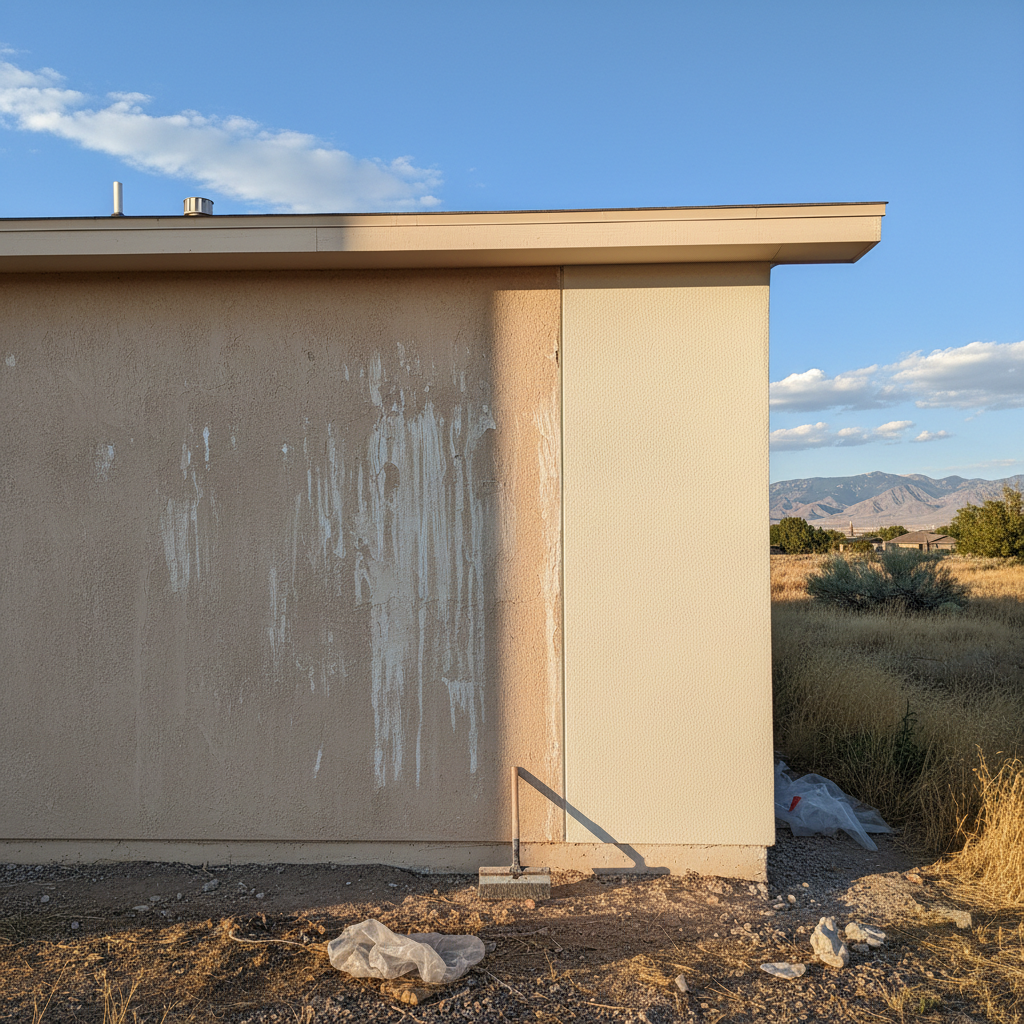
When your home's exterior starts showing deep cracks or failing completely, you are faced with a major decision. Do you go back with a traditional multi-coat cement system, or do you look at modern synthetic alternatives? Charis Stucco sees plenty of homes across the Salt Lake Valley dealing with our harsh weather swings, and the choice you make matters for the long haul.
Traditional Hard Coat Stucco
Traditional Stucco has been the backbone of Utah construction for decades. Charis Stucco works on plenty of mid-century ramblers and split-levels in neighborhoods around Granger where traditional cement plaster is what the house originally wore. Traditional Stucco consists of wire lath, a scratch coat, a brown coat, and a finish color coat.
- Exceptional impact resistance against stray baseballs or lawnmower rocks.
- Naturally fireproof and breathable, letting moisture escape easily.
- Prone to standard shrinkage cracking as Traditional Stucco ages through freezing winters.
Synthetic Stucco Systems
Synthetic Stucco options, often referred to broadly as EIFS, bring an extra layer of foam insulation to the equation. Synthetic Stucco wraps the house tight, which changes how the building handles our freezing winter mornings and scorching summer afternoons.
- Higher upfront installation costs due to specialized materials and multi-step detailing.
- Superior energy efficiency that cuts down utility bills during peak summer and winter months.
- Requires absolute perfection during installation to prevent trapped moisture behind the foam.
Cost and Durability Face-Off
When you are paying for the work, Traditional Stucco usually wins on initial affordability. Synthetic Stucco systems cost more upfront because you are paying for insulation value and specialized foam trims. However, that insulation can pay dividends if your West Valley City home suffers from wild indoor temperature fluctuations. Durability-wise, Traditional Stucco takes a beating and keeps going, while Synthetic Stucco demands flawless flashing around every window and door to keep water from rotting the framing underneath.
Making the Right Call for Local Conditions
Our local weather dumps snow, bakes under intense sun, and experiences rapid freeze-thaw cycles that test every square inch of an exterior wall. If your framing is sound and you want a tough, low-fuss exterior that handles minor impacts without denting, stick with a solid Traditional Stucco system. If you are chasing maximum energy savings and do not mind paying for careful installation, a properly drained Synthetic Stucco system might fit your goals. Weigh your budget against how long you plan to stay in the house before making the final call.