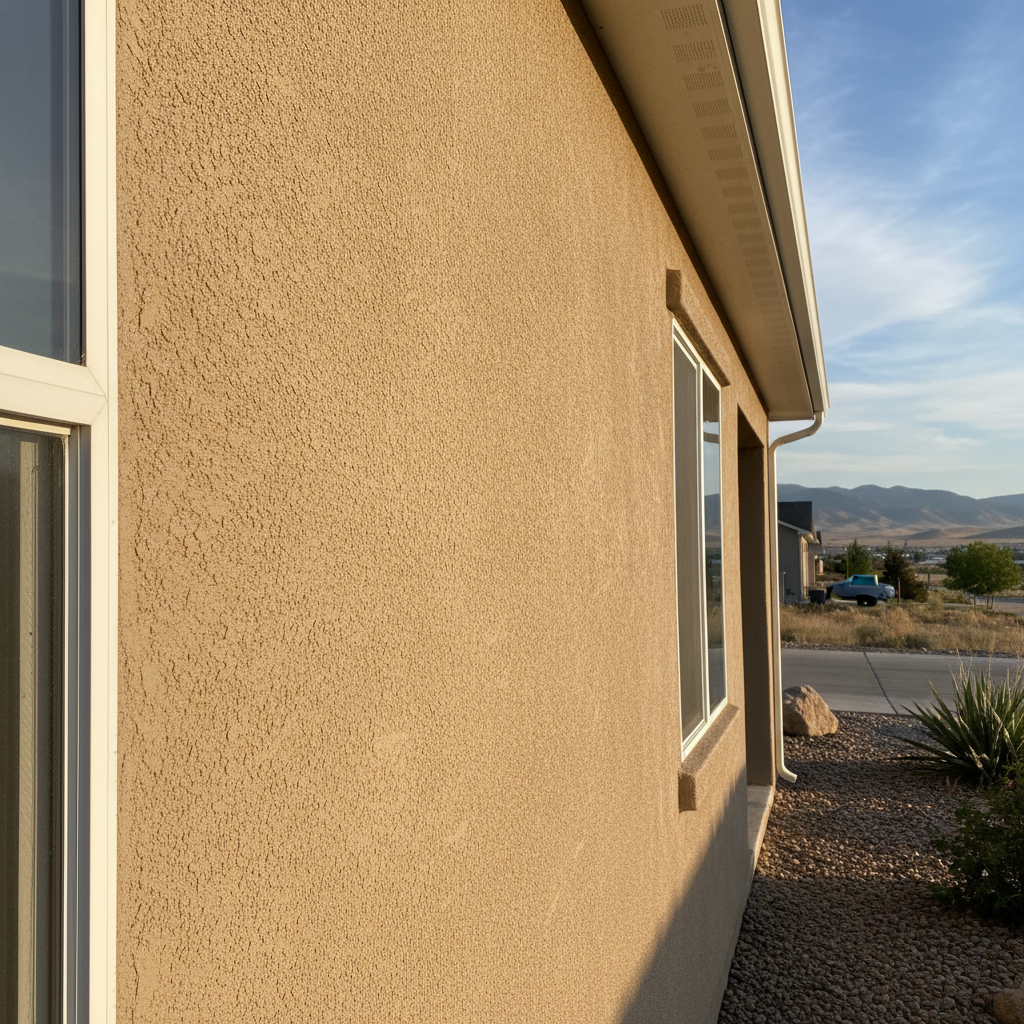
Are you walking around your house and noticing a few mysterious cracks along the walls? Charis Stucco wants you to know what you need to check regarding your stucco before small issues turn into major problems. Living right here in West Valley City means our homes deal with baking summer heat and freezing winter conditions, which can test the limits of exterior plaster. Charis Stucco has seen plenty of houses in neighborhoods near the Oquirrh foothills take a beating from the shifting temperatures and dry winds.
Doing a regular walk-around does not require specialized gear. You can handle the initial visual check yourself on a Saturday morning. Grab a notepad and take a slow stroll around the perimeter of your property. Look closely at areas near the roofline, around windows, and right down near the foundation where lawn sprinklers might be constantly hitting the wall. You are hunting for hairline fractures, dark water stains, or areas where the finish looks like it is starting to bulge or crumble.
What You Can Handle as a DIY Project
You do not need a contractor license to spot surface-level wear and tear. If you find tiny, hairline cracks—anything thinner than a credit card—those are usually just standard shrinkage cracks from the house settling. You can map these out, take photos to track if they grow over the next few months, and use a suitable elastomeric patch for very minor fixes. Keeping your gutters clean and making sure your sprinkler heads are not spraying directly against your exterior walls are also easy wins you can take care of this weekend.
When It is Time to Call a Professional
There is a big difference between a cosmetic surface crack and a deeper structural failure. If you spot spiderweb cracking, stair-step fractures near window corners, or sections where the stucco sounds hollow when you tap on it, put down the DIY patch kit. Those signs usually point to moisture getting trapped behind the barrier or issues with the underlying lath. Charis Stucco frequently gets called out to properties where homeowners tried to caulk over deep cracks, only to find the wood framing underneath was already rotting from hidden leaks.
A professional inspection involves moisture meters and thermal imaging to check what is happening behind the wall without tearing the whole house apart. If your exterior is showing widespread discoloration, soft spots, or white powdery residue known as efflorescence, it is time to bring in someone who has the right tools to diagnose the root cause.
Catching these problems early saves you thousands of dollars down the road. Take an hour this weekend to check your walls, document anything suspicious, and deal with the small stuff before the next seasonal weather shift hits West Valley City, Utah.